01
Request access
Tell TRACE what work you can capture, where it happens, and which hardware path fits the session.
Capture the work you already do with a light sensor kit, and earn a share of the licensing revenue it generates — for as long as the data keeps earning. The earning rate is highest now and falls as the WELL grows, so the hours you bank early are worth the most, year after year. Kits ship to the first cohort first.
The kit
MMT core
Gen3 / Gen4
Chest- or head-mounted scene sensing: wide RGB, depth mapping, audio, barometric anchor, and motion. Gen4 (Q2 2027) adds higher-resolution scene capture and true depth imaging.
Body swarm
6–20 sensors
Pose and motion fidelity for how a person moves, works, and shares space with others.
Baseline kit
~$200 target
Gen3-class core plus six to eight body sensors; higher configurations scale with sensor count and MMT generation.
MMT
required core
Chest- or head-mounted scene and task sensing.
6–20
body sensors
Configured by task, motion fidelity, and setting.
~$200
baseline target
Gen3-class core plus six to eight body sensors.
Gated
validated hours
Only compliant, validated hours count.
How contribution works
TRACE is not asking contributors to perform for a camera. The goal is ordinary task data with enough sensor fidelity, consent discipline, and quality control to make it useful.
01
Tell TRACE what work you can capture, where it happens, and which hardware path fits the session.
02
The MMT records scene context while body sensors capture how you move, reach, turn, lift, and share space.
03
Useful sessions come from real homes, shops, kitchens, benches, job sites, and workspaces — wherever the work already happens.
04
TRACE checks sync, completeness, quality, capture mode, and fraud signals before a session enters the WELL.
Eligible sessions
Strong contributor sessions show movement, tools, timing, proximity, and shared space. TRACE is especially interested in cooperative task data that can't be simulated or collected after the fact.
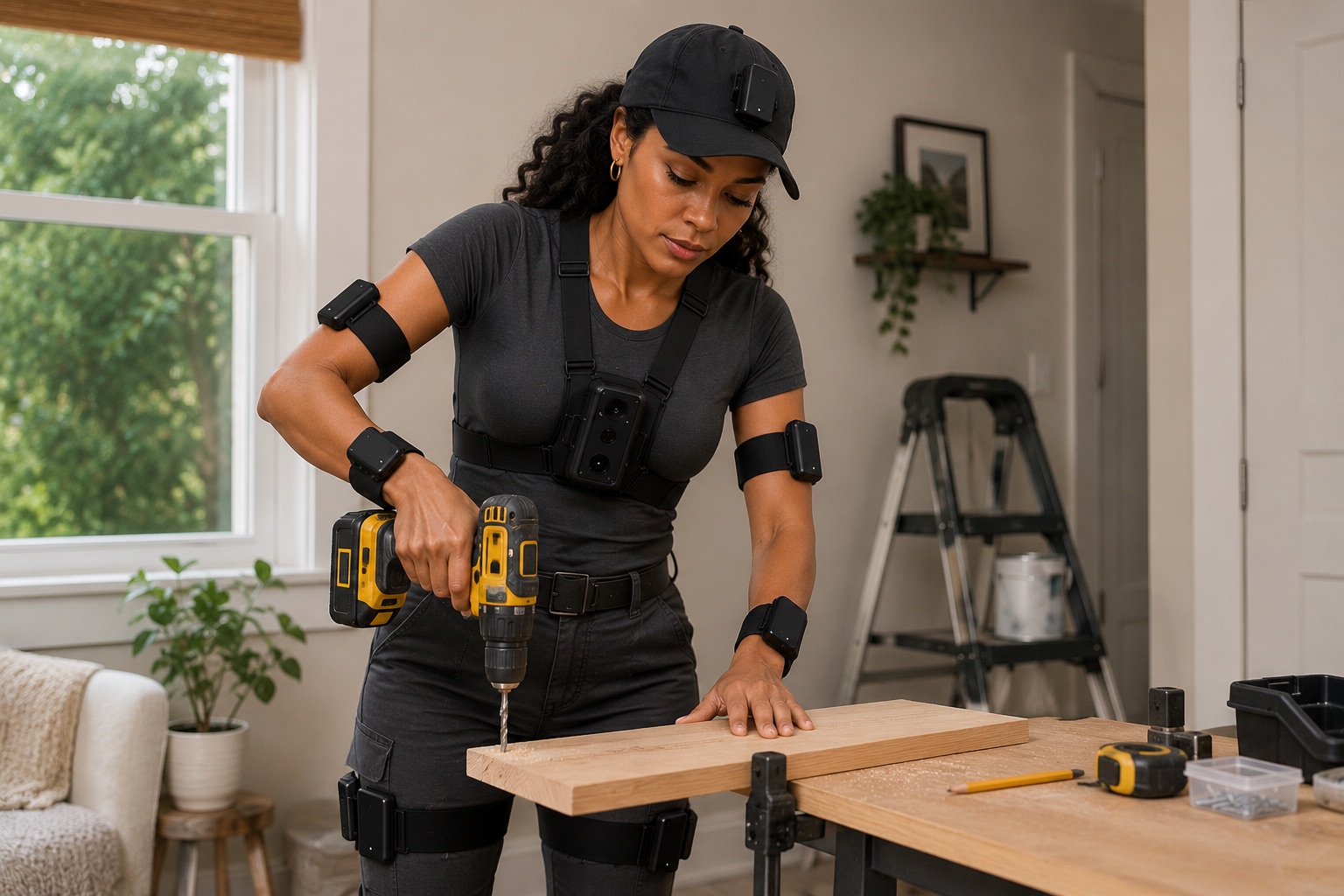
Ordinary work
A contributor captures a normal task — the kit records how they reach, hold, and work, wherever the work happens.
What counts
A simple, well-synced session of someone doing real work can be more valuable than a polished clip. The system cares about physical behavior, context, and validation.
Validation
Contributor trust depends on clear gates. Sessions have to pass quality, consent-aware capture settings, and fraud checks before they enter the WELL or earn credit.
Quality
Sessions are checked for sensor sync, signal completeness, task relevance, and enough context to train future behavior models.
Consent
Contributors choose capture modes and are responsible for local laws and permissions. TRACE supplies controls and guidance.
Fraud
Synthetic, replayed, duplicated, low-effort, or non-compliant capture can be rejected before it earns contributor accounting credit.
The upside
TRACE is built around contributor alignment: the work you verify should not disappear into someone else's dataset. Exact terms are set during onboarding.
Contributor share
Your share keeps paying. Every time the WELL is licensed, contributors are paid a share of that payment — and again on the next one, for as long as the data keeps earning. Exact terms are set during onboarding.
Early network
The rate for each recorded hour starts at up to 64× and only falls toward a 1× baseline. Get in early — 30× or more is still on the table for the first public contributors — and every hour you bank holds that rate for as long as the data licenses.
How the recurring share works
The multiplier only falls — up to 64× at the start, 30× or more for early public contributors, toward 1× as the network matures. The hours you bank early hold their rate for good.
Start here
The first cohort gets kits first, and every hour you bank early is worth more for good. Tell TRACE what you can capture and where you work to claim your place in line.