Behavior
Human task sequences.
Study how real people reach, pause, hand off, recover, share workspaces, and move through cluttered spaces.
TRACE is opening an early researcher path for embodied AI teams that need synchronized motion, scene context, timing, and cooperation from ordinary work outside the lab.
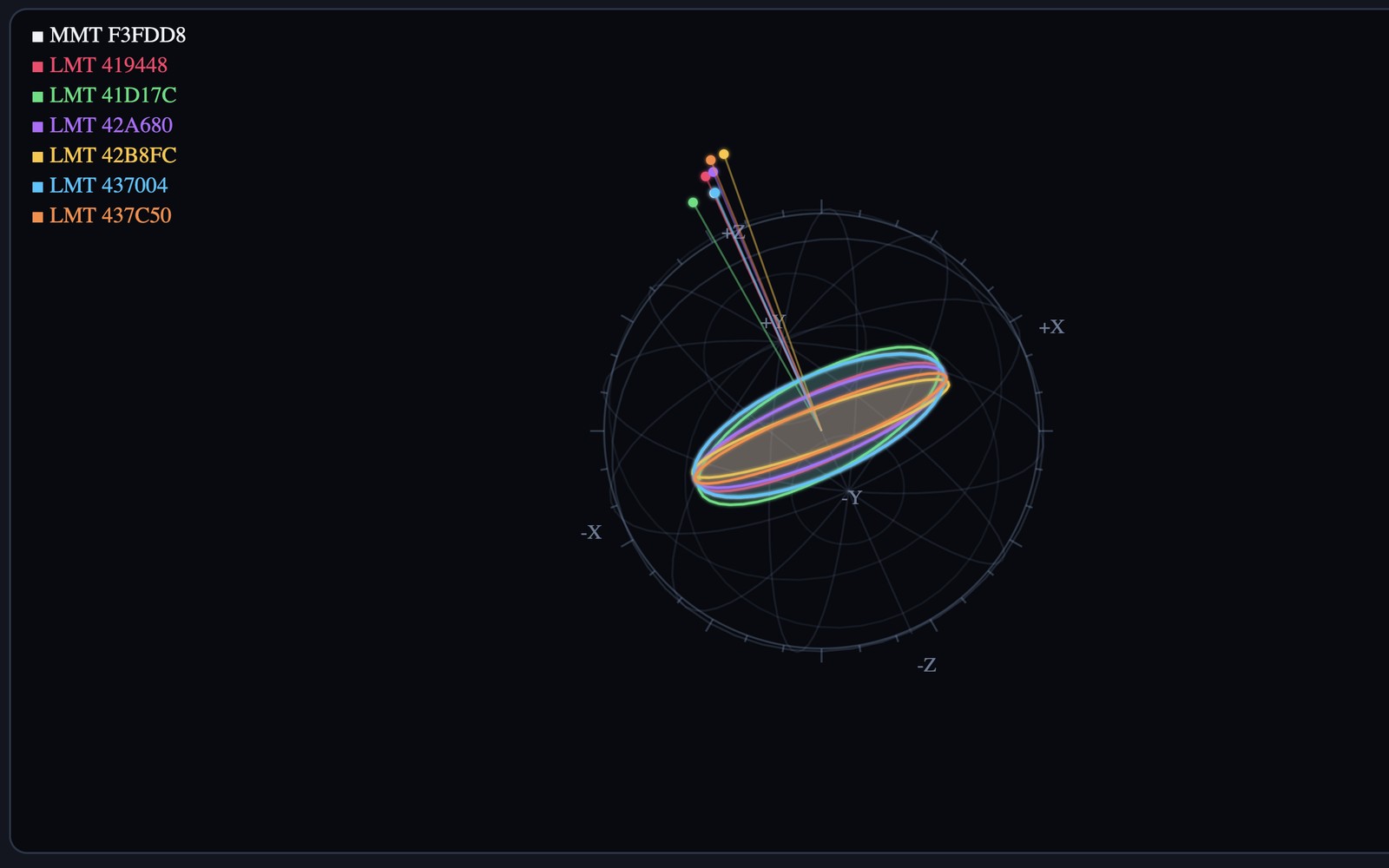
Synchronized motion
One real session — the MMT and six body sensors, each device's orientation resolved and locked to a common clock.
WELL
data corpus
Real-world human task sessions, validated and licensable.
Multi
modal streams
Motion, scene, timing, audio, and task context captured together.
Early
access path
Built for early research and pre-revenue exploration.
License
deployment
Commercial use requires terms that protect the dataset and contributors.
Early access · advisory
The WELL is still being built — which is the opening. Join early as a research advisor and we'll tune what we capture to what your work needs: the tasks, modalities, and conditions that matter for your models. You help define the dataset instead of inheriting one.
The tasks, edge cases, and signal your models actually need.
Capture priorities and protocols adjust to advisor input while the corpus is young.
Advisors get early access to the sessions they helped define.
The data
Text and image datasets already exist at scale; the physical record does not. A robotics corpus has to preserve the coupled signal a body produces at work — movement, environment, task progress, and human timing.
Behavior
Study how real people reach, pause, hand off, recover, share workspaces, and move through cluttered spaces.
Egocentric + instrumented
Fully instrumented egocentric capture — a first-person 3D scene stream paired with body-worn sensors that measure pose directly, not pose inferred from the egocentric video after the fact.
Diversity
Generalization tracks the diversity of training data more than raw repetitions — and diversity is exactly what ordinary, varied settings produce and a controlled setup can't.
Inside a session
Every capture is a synchronized bundle — sampled fast, stored at working rates, one clock across streams. This is the raw material your models would train on.
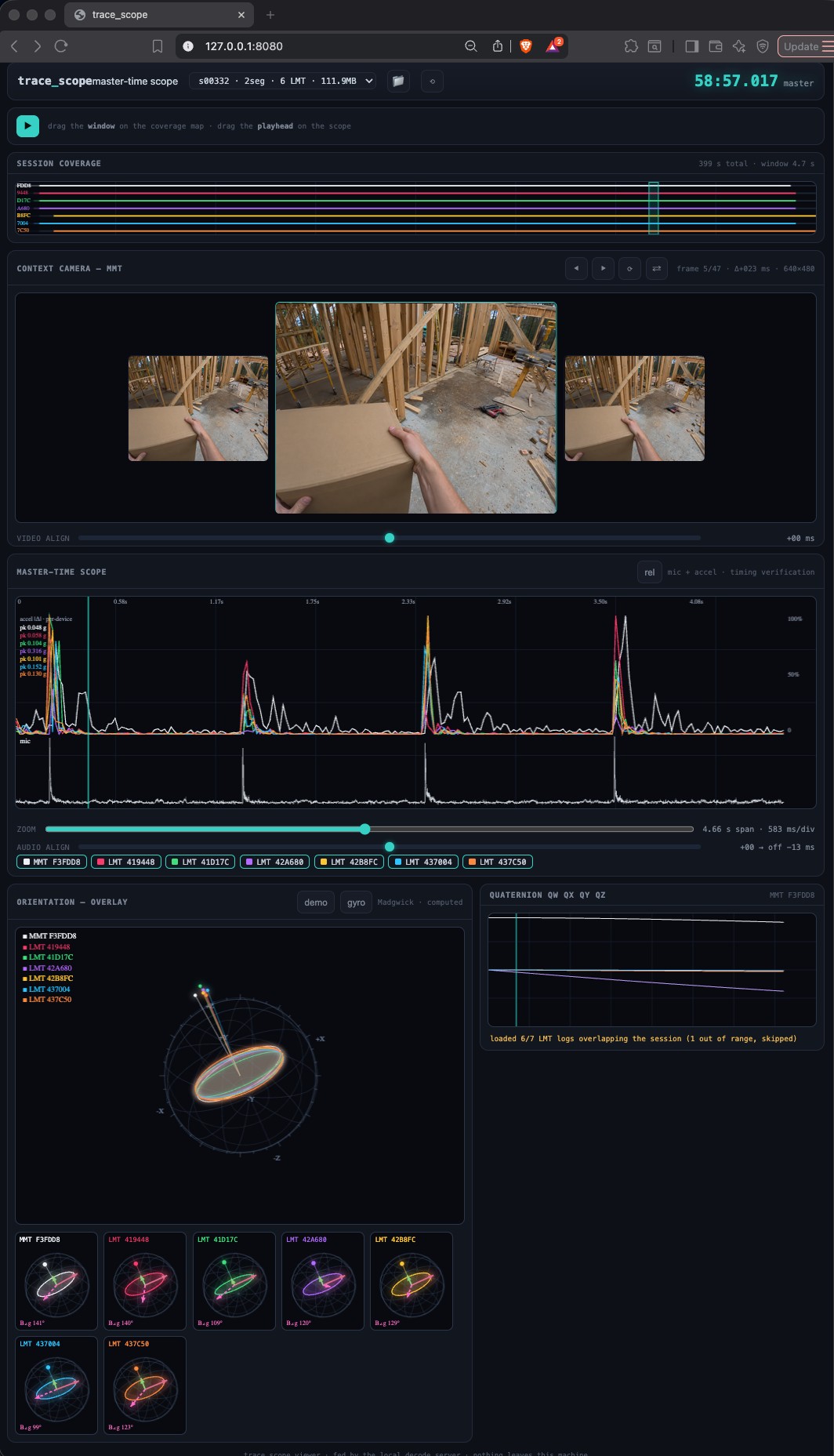
One real session in the TRACE scope — first-person scene, per-device motion and audio, and full orientation for the MMT and six body sensors, all aligned to a single master clock.
One session, every stream aligned to the millisecond. Illustrative layout, not real capture.
| Stream | Captures | Sampled | Stored |
|---|---|---|---|
| Body motion (IMU) | Accelerometer + gyroscope across the worn sensor swarm | 240 Hz | 50 Hz |
| Magnetometer | Magnetic heading and orientation reference | 240 Hz | 10 Hz |
| Context video | Wide-angle RGB scene | — | 10 Hz |
| Depth (dToF) | 48×32 time-of-flight depth map | — | 10 Hz |
| Barometric | Pressure and altitude context | — | 10 Hz |
| Audio | High-fidelity voices and environmental sound | — | continuous |
Sampled rate shown where it exceeds the stored rate — inertial streams are oversampled and quantized down. All streams share one clock.
Research areas
The WELL is most valuable where robots need to work around people, tools, space, and changing context rather than clean benchmark scenes.
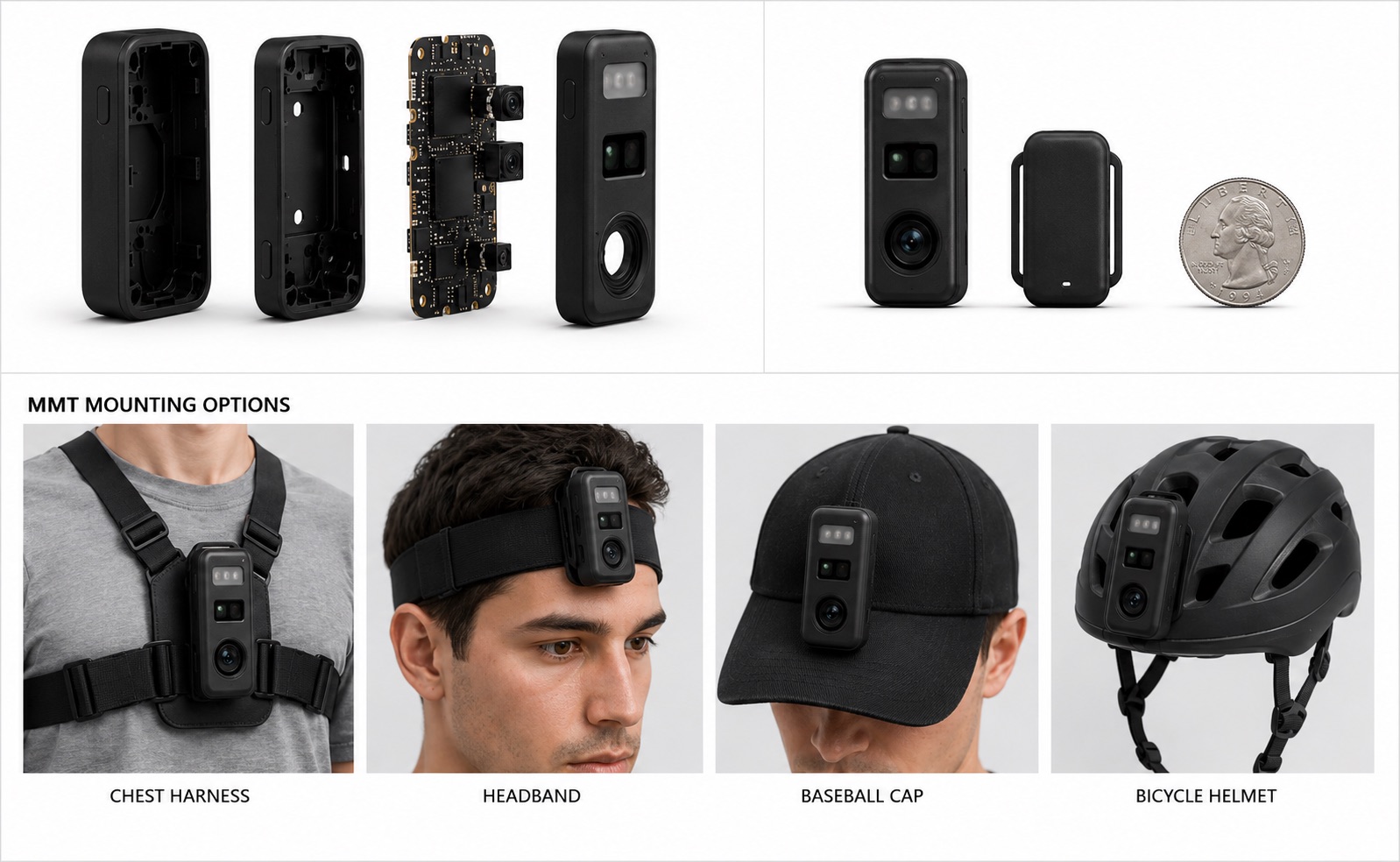
Capture hardware
The MMT core anchors scene and task capture; the body-worn LMT swarm adds motion fidelity.
Access path
TRACE matches access to the work being done. That keeps early research useful while respecting contributor accounting, consent boundaries, and deployment licensing.
Task capture
Data review
Labeling & grading
The WELL
Model training
Every uploaded hour moves through quality grading, fraud detection, consent-aware capture settings, and contributor accounting before it can enter the WELL.
01
Share the research problem, task category, model type, and whether the work is academic, open, pre-revenue, or commercial.
02
TRACE can map early requests to exploratory data products while keeping deployment licensing separate.
03
Access should protect contributors, consent boundaries, privacy controls, and the long-term usefulness of the corpus.
Licensing
The access model keeps research and commercial deployment distinct, so the WELL can support early discovery without giving away the economics of production use.
Research
Non-commercial research and pre-revenue work can use a lighter path where the goal is learning, evaluation, and publication rather than deployment.
Commercial
When data contributes to a commercial model or product, licensing should support dataset operations and contributor-aligned economics.
Governance
Different task categories may carry different quality grades, capture constraints, privacy boundaries, and downstream usage limits.
Questions
A practical, honest corpus that makes hard physical behavior easier to study.
Data format
The intent is to preserve raw multimodal value while adding enough metadata, task structure, and quality grading to make research work practical.
Availability
Research access starts through the request flow. TRACE uses that intake to understand fit, task category, and the right access path as WELL inventory grows.
Synthetic data
Simulation and video-estimated pose help, but most egocentric datasets are camera-only, with body pose inferred from the first-person video — and benchmarked against marker-based capture, that inferred pose drifts 15–25 cm per joint. TRACE is fully instrumented egocentric capture: the scene is recorded first-person and the body is measured directly, preserving the record robots need — timing, hesitation, tool use, proximity, and adaptation.
Research access
Tell TRACE what you are studying, which task categories matter, and whether the work is research-only, pre-revenue, or moving toward deployment.